Search


Will Ridley Scott's New "Alien" Prequel Mimic William Gibson's Awesome Unfilmed Alien 3 Screenplay?

sexta-feira, 31 de julho de 2009 · 0 comentários

Will Ridley Scott's New "Alien" Prequel Mimic William Gibson's Awesome Unfilmed Alien 3 Screenplay?

Ridley_scott_cam FADE IN: DEEP SPACE - THE FUTURE: The silent field of stars — eclipsed by the dark bulk of an approaching ship.  CLOSER…

William Gibson’s “Alien 3″ Screenplay

20th Century Fox is rebooting its “Alien” franchise with Jon Spaihts to write a prequel that has Ridley Scott set to return as director.

The film will be a prequel to the seminal 1979 film about an extraterrestrial creature that stalks and kills the crew of a spaceship. The 1979 epic starred Tom Skerritt and Sigourney Weaver. The new treatment will precede that film, in which the crew of a commercial towing ship returning to Earth is awakened and sent to respond to a distress signal from a nearby planetoid. The crew discovers too late that the signal was generated by an empty ship to warn them.

Alien garnered both critical acclaim and box office success, receiving an Academy Award for Visual Effects,[and was ranked by the American Film Institute in 2008 as the seventh-best film in the science fiction genre.

The success of Alien launched three sequel and two prequel films, including  Aliens (1986), Alien 3 (1992), and Alien Resurrection (1997).[10] The subsequent prequels Alien vs. Predator (2004) and Aliens vs. Predator: Requiem (2007).

20902926e4e9f250a9832f3761026fad.image.395x600 Spaihts has carved out a niche for space thrillers. Fox has also hired him to rewrite “The Darkest Hour,” which Timur Bekmambetov to produce with Tom Jacobson. Spaihts is writing “Children of Mars” for Disney and Scott Rudin, and he will follow by rewriting “St. George and the Dragon” for Sony and Red Wagon.

The BIG question is will in follow William Gibson’s screenplay where the action takes place on a space station above Earth. Gibson’s Aliens become an air-born virus that cause infected humans to rip off their skins and become Xenomorphs. Gibson’s script was never made into a movie.

William Gibson’s “Alien lll” Screenplay

Posted by Casey Kazan.

Sources:

http://www.variety.com/article/VR1118006722.html?categoryid=13&cs=1

http://io9.com/5327020/yes-ridley-scott-will-direct-the-alien-prequel


Mars Climate-Change Cycles in 3-D

· 0 comentários

Mars Climate-Change Cycles in 3-D

Mars Climate Cycles

Climate cycles persisting for millions of
years on ancient Mars left a record of rhythmic patterns in thick
stacks of sedimentary rock layers, revealed in three-dimensional detail
by a telescopic camera on NASA’s Mars Reconnaissance Orbiter.

Researchers using the High Resolution Imaging Science Experiment
camera report the first measurement of a periodic signal in the rocks
of Mars. This pushes climate-cycle fingerprints much earlier in Mars’
history than more recent rhythms seen in Martian ice layers. It also
may rekindle debates about some patterns of rock layering on Earth.

Layers of similar thickness repeat dozens to hundreds of times in
rocks exposed inside four craters in the Arabia Terra region of Mars.
In one of the craters, Becquerel, bundles of a 10-layer pattern repeat
at least 10 times, which could correspond to a known 10-to-one pattern
of changes in the tilt of the planet’s rotation axis.

“Each layer has weathered into a stair step in the topography where
material that’s more resistant to erosion lies on top of material
that’s less resistant to erosion,” said Kevin Lewis of the California
Institute of Technology, Pasadena, who is the lead author of a report
on the periodic layering published in the Dec. 5 edition of the journal
Science.

Some periodic change in the environment appears to have affected how
resistant the rock-forming sediments became, perhaps from changes in
what size of sand or silt particles were deposited by the wind, or from
how the particles were cemented together after deposition. Some of the individual layers are less than three feet thick.

The camera, called HiRISE for short, took pairs of images of each
site from slightly different angles in orbit, providing the stereo
information necessary for determining each layer’s thickness.

“It’s easy to be fooled without knowing the topography and measuring
the layers in three dimensions,” said Alfred McEwen of the University
of Arizona, Tucson, principal investigator for the camera and a
co-author of the new report. “With the stereo information, it is clear
there’s a repeating pattern to these layers.”

Geologists commonly find “rhythms,” or repeating patterns, in
sedimentary layers on Earth. Determining the source of the rhythms can
be difficult. Some result from annual or tidal cycles, or from episodic
flooding that may not be periodic at all, but the role of longer-term
astronomical cycles has been debated. One step in showing that
astronomical cycles can leave their mark in sediments came from finding
repeating five-layer sets in some terrestrial bedrock, matching a known
five-to-one ratio of two cyclical variations in Earth’s orbit.

Lewis and colleagues found something similar on Mars: “Our findings
suggest that cycles of climate change led to the patterns we see
recorded in the Mars rock layers today, possibly as a result of similar
variations in Mars’ orbit,” he said. “Mars has a 10-to-one ratio in
cycles of how its tilt changes — smaller wobbles within larger
packages. Sure enough, we see a 10-to-one ratio in one of these layered
deposits. It’s like trying to identify a song — it’s easier if there
are multiple instruments playing different parts, rather than just a
single rhythm.”

In addition to having rhythm of 10 beats to the bar instead of
Earth’s five-beat pattern, Mars has characteristics that make it a good
laboratory for studying how astronomical cycles affect climate. The
tilt of Mars’ axis varies much more than the axis of Earth, because
Earth’s relatively large moon provides a stabilizing effect. And, at
least for most of its history, Mars has lacked the oceans and thick
atmosphere that, on Earth, modulate the effects of orbital variations
and add their own cyclical patterns.

The 10-beat pattern of Mars’ wobble lasts about 1.2 million years.
If the 10-layer bundles in Becquerel crater are indeed signatures of
that cycle, the 10 or more bundles stacked on each other record about
12 million years when environmental conditions affecting sedimentation
were generally steady except for effects of the changing tilt.

NASA’s Jet Propulsion Laboratory, a division of Caltech, manages the
Mars Reconnaissance Orbiter for NASA’s Science Mission Directorate,
Washington. Lockheed Martin Space Systems, Denver, is the prime
contractor for the project and built the spacecraft. The HiRISE camera
was built by Ball Aerospace and Technologies Corp., Boulder, and is
operated by the University of Arizona.

Posted by Casey Kazan from materials submitted by NASA.


NexGen AI -A Threat to Human Civilization?

quinta-feira, 30 de julho de 2009 · 0 comentários

NexGen AI -A Threat to Human Civilization?

Artificial Intelligence What could a criminal do with a speech synthesis system that could masquerade as a human being? What happens if artificial intelligence technology is used to mine personal information from smartphones?

AI is becoming the stuff of future scifi greats: A robot that can open doors and find electrical outlets to recharge itself. Computer viruses that no one can stop. Predator drones, which, though still controlled remotely by humans, come close to a machine that can kill autonomously.

Real
AI effects are closer than you might think, with entirely automated
systems producing new scientific results and even holding patents on
minor inventions.  The key factor in singularity scenarios is the
positive-feedback loop of self-improvement: once something is even
slightly smarter than humanity, it can start to improve itself or
design new intelligences faster than we can leading to an intelligence
explosion designed by something that isn’t us.

Artificial intelligence will surpass human intelligence after 2020,
predicted Vernor Vinge, a world-renowned pioneer in AI, who has warned
about the risks and opportunities that an electronic super-intelligence
would offer to mankind.

Exactly
10 years ago, in May 1997, Deep Blue won the chess tournament against
Gary Kasparov. “Was that the first glimpse of a new kind of
intelligence?” Vinge was asked in an interview with Computerworld.

“I think there was clever programming in Deep Blue,” Vinge stated in
the interview, “but the predictable success came mainly from the
ongoing
trends in computer hardware improvement. The result was a
better-than-human performance in a single, limited problem area. In the
future, I think that improvements in both software and hardware will
bring success in other intellectual domains.”

“It seems plausible that with technology we can, in the fairly near
future,” Vinge continued, create (or become) creatures who surpass
humans in every intellectual and creative dimension. Events beyond such
an event — such a singularity — are as unimaginable to us as opera is
to a flatworm.”

Vinge is a retired San Diego State University professor of
mathematics, computer scientist, and science fiction author who is
well-known for his 1993 manifesto, “The Coming Technological
Singularity, in which he argues that exponential growth in technology
means a point will be reached where the consequences are unknown.

Alarmed by the rapid advances in artificial intelligence, also commonly called “AI”, a group of computer scientists met to debate whether there should be limits on research that might lead to loss of human control over computer-based systems that carry a growing share of society’s workload, from waging war to chatting with customers on the phone.

Scientists, reported CIO Today, pointed to a number of technologies as diverse as experimental medical systems that interact with patients to simulate empathy, and computer worms and viruses that defy extermination that have reached the “cockroach” stage of machine intelligence.

While the computer scientists agreed that we are a long way from one of film’s great all-time evil villains, the Hal 9000, the computer that took over the Discovery spaceship in “2001: A Space Odyssey,” they said there was legitimate concern that technological progress would transform the work force by destroying a widening range of jobs, as well as force humans to learn to live with machines that increasingly copy human behaviors.

Eric Horvitz of Microsoft said he believed computer scientists must considered seriously the possibility of superintelligent machines and artificial intelligence systems run amok.

“Something new has taken place in the past five to eight years,” Dr. Horvitz said. “Technologists are replacing religion, and their ideas are resonating in some ways with the same idea of the Rapture.”

This sentiment is best illustrated by the creation of  Singularity University,a joint Google/NASA venture that  has begun offering courses to prepare a “cadre” to help society cope with future ramifications.

An advanced academic institution sponsored by leading lights including
NASA and Google (so it couldn’t sound smarter if Brainiac 5 traveled
back in time to attend the opening ceremony).  The “Singularity” is the
idea of a future point where super-human intellects are created,
turbo-boosting the already exponential rate of technological
improvement and triggering a fundamental change in human society -
after the Agricultural Revolution, and the Industrial Revolution, we
would have the Intelligence Revolution.

The Singularity
University proposes to train people to deal with the accelerating
evolution of technology, both in terms of understanding the directions
and harnessing the potential of new interactions between branches of
science like artificial intelligence, genetic engineering and
nanotechnology.

Inventor and author Raymond Kurzweil is one of
the forces behind SU, which we presume will have the most awesomely
equipped pranks of all time (”Check it out, we replaced the Professor’s
chair with an adaptive holographic robot!”), and it isn’t the only
institutions he’s helped found.  There’s also the Singularity Institute
for Artificial Intelligence whose sole function is based on the
exponential AI increases predicted.  The idea is that the first AI
created will have an enormous advantage over all that follow, upgrading
itself at a rate they can never catch up on simply because it started
first, so the Institute wants to work to create a benevolent AI to
guard us against all that might follow.

Make no mistake: the AI race is on, and Raymond wants us to win.

Posted by Casey Kazan.

http://www.cio-today.com/story.xhtml?story_id=13000CNXS03G&page=3


Experts Split on Jupiter's Role In Life On Earth: Protector or Ultimate Destroyer?

quarta-feira, 29 de julho de 2009 · 0 comentários

Experts Split on Jupiter's Role In Life On Earth: Protector or Ultimate Destroyer?

Calar7 Jupiter’s been in the news a lot recently, as anywhere there’s on ocean-sized explosion tends to be.  The recent impact (and detonation) of an asteroid against the gas giant’s hide has triggered the usual flurry of discussion with the planet cast as everything from cosmic protector to vengeful heavenly killer (both believable aspects of Jupiter, the god the Romans ripped off from the Greeks, but less so for the actual solar system object).  Both miss the real answer: it’s just there, and sometimes things just happen.

The cosmic protector idea is popular and plays to our egos by emphasising the importance of our solar system setup.  The idea is that Jupiter’s gravity acts as a giant interplanetary vacuum cleaner shield, sucking in rogue comets and asteroids before they penetrate to the inner planets.  After all, it got hit twice in the last fifteen years!  It’s a cool idea, and can only be countered by, er, applying even the most basic facts.  Jupiter’s orbital radius is three quarters of a trillion meters - that means the orbit covers almost five trillion meters, while the planet is only seventy million miles across.  Even accounting for its gravitational attraction (which is actually a false argument, as we’ll see in the next section) it can never “shield” anything even remotely near a single percent of that path.  It’s like claiming a moth buzzing around your head will shield you from thrown darts. The NASA image above shows three clusters of impacts, as well as temperature differences in Jupiter’s cloud belts.

The vengeful god idea is based on a flaw in the above - just because an asteroid is caught in Jupiter’s gravity, it won’t necessarily crash into the surface.  If it’s further out it’ll just get slung around into a new path - Jupiter and Saturn create a kind of “planetary pinball” machine, randomly rearranging the vectors of anything coming in and out anywhere near them.  Some say that Jupiter slings extinction-level rocks at us the odd time, only missing by the barest of margins.

The first flaw with this is the same as for the protector - Jupiter is absolutely gigantic by planetary scales, but - like any planet - still tiny by inter-planetary scales.  If it aims anything it was by accident and - here’s the important bit - it’s just as likely to redirect something away from us as towards us.  Claiming that Jupiter is out to get us is like blaming the weather.

The simple fact is that humans want things to have functions.  We’d prefer benevolent forces, but deep down we’ll still take cruel and vengeful gods over random chance.  It’s the origin of spiritism, the polytheism of our earliest societies, and can only be beaten into submission by years of science and advancement.  It often takes generations  to even hammer down the multitude of imagined forces into one central deity, never mind getting rid of them altogether.  Which is why it’s possible to look through an infrared image taken by satellites we launched with our own skill, and still try to assign motives to what we see.

Luke McKinney

Jupiter’s Role


Realworld "Angels & Demons": Surges of Antimatter Observed in Space

terça-feira, 28 de julho de 2009 · 0 comentários

Realworld "Angels & Demons": Surges of Antimatter Observed in Space

Antimatter Scientists have seen surges in antimatter
particles sweeping through space, and some believe the cause could be
collapsing cosmic strings.  As opposed to Ming the Merciless.  Note
that cosmic strings are entirely different strings from string theory -
blame any confusion on the fact that there are far more cool things
happening in space than we have words for.

Cosmic strings are thought to come from from phase changes in space -
just as water freezing into ice may crack, cosmic strings are “cracks”
in gravitational fields.  Such strings would be thinner than a proton
but incredibly dense, just a couple of kilometers of such string would
have the same mass as Earth.

Cosmic string theory fell out of favor for a while, but a recent
resurgence has seen scientists hunting them in everything from galactic
double images to the cosmic wave background of the universe.  The most
awesome-sounding option is the positron surge observed last year by the
PAMELA (Payload for Antimatter Matter Exploration and Light-Nuclei
Astrophysics), an increased flux of antimatter-electrons sweeping
through space along with all the usual cosmic rays.

According to Professor Vachaspati of Case Western Reserve University,
these antimatter emissions could come from collapsing string segments.
Oscillations in the strings could cause loops of string to get “tied
off”, forming loops.  Such separated loops would collapse, releasing a
burst of positrons such as those detected by PAMELA.

It remains to be seen whether cosmic strings are truly back (and
blowing up!), but a whole host of missions - from the LISA
interferometry satellite network, to the South Pole IceCube neutrino
detector - will be searching for strings in the near future.

Posted by Luke McKinney.


Cosmic Strings Could Solve Positron Mystery


New Species Discovered Daily in Midst of 6th Mass Extinction

· 0 comentários

New Species Discovered Daily in Midst of 6th Mass Extinction

Yangtze River Dolphin

Since the last summary of the world's mammals was published in 2005, giving Linnaean tags to roughly 5,400 mammalian species then known, some 400 or so new species have been discovered.

Humanity doesn't need a moon-base or a manned trip to Mars, says Harvard’s  E.O. Wilson,  evolutionary biologist and author of The Creation, “We need an
expedition to planet Earth, where probably fewer than 10 per cent of
species are known to science, and fewer than 1 per cent of those have
been studied beyond a simple anatomical description and a few notes on
natural history. At the same time, we are engaged in a genocide against
those species, known and unknown; the sixth mass extinction has begun.”

In an interview with Natalie Angier of the New York Times, John Robinson, an executive vice president at the Wildlife Conservation Society observed that “we've only described an estimated 15 percent of all species on Earth, so most of what's going extinct are things we didn't even know existed." In addition are the known species that we've managed to directly or indirectly annihilate, like the Yangtze river dolphin (image above), declared functionally extinct two years ago, or the dusky seaside sparrow, which gave its last flutter in 1987.

Experts say that at least half of the world's current species will be completely gone by the end of the century. Most biologists say that we are in the midst of an anthropogenic mass extinction. Numerous scientific studies confirm that this phenomenon is real and happening right now. Should anyone really care? Will it impact individuals on a personal level? Scientists say, "Yes!

Critics argue that species disappear and new ones emerge all the time. That's true, if you're speaking in terms of millennia. Scientists acknowledge that species disappear at an estimated rate of one species per million per year, with new species replacing the lost ones at around the same rate. Recently humans have accelerated the extinction rate to where several entire species are annihilated every single day. The death toll artificially caused by humans is mind-boggling. Nature will take millions of years to repair what we destroy in just a few decades.

One analysis, published in the journal Nature, shows that it takes 10 million years before biological diversity even begins to approach what existed before a die-off. Over 10,000 scientists in the World Conservation Union have compiled data showing that currently 51 per cent of known reptiles, 52 per cent of known insects, and 73 per cent of known flowering plants are in danger along with many mammals, birds and amphibians. It is likely that some species will become extinct before they are even discovered, before any medicinal use or other important features can be assessed. The cliché movie plot where the cure for cancer is about to be annihilated is more real than anyone would like to imagine.

Research done by the American Museum of Natural History found that the vast majority of biologists believe that mass extinction poses a colossal threat to human existence, and is even more serious of an environmental problem than one of its contributors- global warming. The research also found that the average person woefully underestimates the dangers of mass extinction. Powerful industrial lobbies would like people to believe that we can survive while other species are quickly and quietly dying off. Irresponsible governments and businesses would have people believe that we don't need a healthy planet to survive- even while human cancer rates are tripling every decade.

Posted by Casey Kazan with Rebecca Sato.

Sources:

http://www.nytimes.com/2009/07/26/weekinreview/26angier.html?_r=1&ref=science


The Quelccaya Ice Cap -The World's Largest Tropical Ice Field is Vanishing

segunda-feira, 27 de julho de 2009 · 0 comentários

The Quelccaya Ice Cap -The World's Largest Tropical Ice Field is Vanishing

2006-05-24 The Quelccaya Ice Cap in the heart of the Peruvian Andres, is the largest
tropical body of ice in the world. The ice cap is at an average
altitude of 5,470 meters (18,600 ft) and spans an area of 44 square
kilometers (17 miles).  As the ice cap is retreating, it is exposing almost perfectly preserved plant specimens dating back 5,200 year, indicating that it has been more than 50 centuries since the ice cap was smaller than it is today

According to recent research, one of the glaciers in this ice cap, the
Peruvian Qori Kalis, like the snowfields of Africa’s Mount Kilimanjaro,
is rapidly melting and could soon vanish completely (comparisons with
previous mapping showed 33% of Mount Kilimanjaro’s ice had disappeared in
the last two decades - 82% since 1912).

The icecap has lost approximately 20% of its area since 1978, and
the current rate of retreat is increasing. Ice cores taken from Upper
Fremont Glacier in Wyoming show an oxygen isotope profile similar to
that of the Quelccaya ice cores at the end of the Little Ice Age, a
period of cooler global temperatures between the years 1550 and 1850.
The sudden alterations in the oxygen isotope ratio found in ice core
samples from these two remotely located glaciers, provide evidence of a
sudden global climate change in the mid-latitude regions of the planet.

“I would not be surprised to see half of it disappear in this coming
year,” said climatologist Lonnie Thompson, from Ohio State University.
Thompson has been studying the Qori Kalis glacier since 1978.

“In the first 10 years [that] we observed the glacier, it was
retreating 6 meters (19.7 feet) every year,” Thompson said. “In the
last few years, it has started retreating 60 meters (197 feet) every
year - a 10-fold increase. On top of that you will have natural
phenomena like El Nino, which release heat into the lower atmosphere,”
he predicted.

“The combination of those two things will have a big impact on glaciers
throughout the tropics,” said Thompson. “No matter what we do, we are
going to lose the glaciers on Kilimanjaro and the lower elevation
glaciers in the Andes.”

“Kilimanjaro could be gone by 2020,” he suggested. “In the Andes, some
of the glaciers are bigger, but I think we are talking 30 to 50 years.”

This will cause many problems for some of the poorest people on earth
since they depend upon annual glacial melt to sustain their crops. Loss
of these glaciers will cause a huge drought and crop failure.

“These changes are going to take place and these people will be impacted,” observed Thompson. “They have to find ways to adapt.”

Posted by Jason McManus.

Related Galaxy posts:

Monitoring Climate Change -Expert Says We Need Lunar Observatories
The Timeline For 21st Century "Climate Change Events"
Mystery of the Earth’s Polar Caps 41 Million Years Ago, Solved
The Crisis is Coming: How Peak Water Could Reshape Civilization
The "Little Ice Age" Argument Makes a Comeback: Abrupt Climate Change Goes Both Ways, Warns Scientist
Reports Warn that Climate Change & Eco-migration Could Lead to Increased Warfare
Are Global Warming Models Accurately Predicting Our Future? New Study Reveals the Answer—A Galaxy Interview

Source Link


Stephen Hawking: "Will Extraterrestrial Life Be Carbon Based?" (Final of 4-Part Series)

domingo, 26 de julho de 2009 · 0 comentários

Stephen Hawking: "Will Extraterrestrial Life Be Carbon Based?" (Final of 4-Part Series)

The_dawn_of_man_2001_a_space_odyssey-400-400 On the 50th anniversary of NASA, Stephen Hawking, Newton’s heir as the
Lucasian Professor of Mathematics at the University of Cambridge,
was asked the question, "Are we alone?"

His answer was short and simple; “probably not.”

Hawking outlined three possibilities. One, being that there is no life
out there, and two – somewhat pessimistically, that when intelligent life gets smart
enough to send signals in to space, it is also busying itself with stockpiling nuclear bombs.

Hawking, known not only for his sharp mind,
but his also for his biting sense of humor, prefers option number three. “Primitive
life is very common and intelligent life is fairly rare,” he quickly added: “Some would say it has yet to occur on earth.”

We should be careful if we ever happen upon extraterrestrial life, Hawking warns. Alien life may not have DNA like ours: “Watch out
if you would meet an alien. You could be infected with a disease with
which you have no resistance.”

What we normally think of as ‘life’ is based on chains of carbon atoms, with a few other atoms, such as nitrogen or phosphorous, Hawking observed in his lecture, Life in the Universe. We can imagine  that one might have life with some other chemical basis, such as silicon, “but carbon seems the most favorable case, because it has the richest chemistry.”

The Earth was formed largely out of the heavier elements, including carbon and oxygen. Somehow, Hawking observes, “some of these atoms came to be arranged in the form of molecules of DNA. One possibility is that the formation of something like DNA, which could reproduce itself, is extremely unlikely. However, in a universe with a very large, or infinite, number of stars, one would expect it to occur in a few stellar systems, but they would be very widely separated.”

Other prominent scientists have warned that we humans may be
blinded by our familiarity with carbon and Earth-like conditions. In
other words, what we're looking for may not even lie in our version of
a "sweet spot". After all, even here on Earth, one species "sweet spot"
is another species worst nightmare. In any case, it is not beyond the
realm of feasibility that our first encounter with extraterrestrial
life will not be a solely carbon-based fete.

Alternative
biochemists speculate that there are several atoms and solvents that
could potentially spawn life. Because carbon has worked for the
conditions on Earth, we speculate that the same must be true throughout
the universe. In reality, there are many elements that could
potentially do the trick. Even counter-intuitive elements such as
arsenic may be capable of supporting life under the right conditions.
Even on Earth some marine algae incorporate arsenic into complex
organic molecules such as arsenosugars and arsenobetaines.

Several
other small life forms use arsenic to generate energy and facilitate
growth. Chlorine and sulfur are also possible elemental replacements
for carbon. Sulfur is capably of forming long-chain molecules like
carbon. Some terrestrial bacteria have already been discovered to
survive on sulfur rather than oxygen, by reducing sulfur to hydrogen
sulfide.

Nitrogen and phosphorus could also potentially form
biochemical molecules. Phosphorus is similar to carbon in that it can
form long chain molecules on its own, which would conceivably allow for
formation of complex macromolecules. When combined with nitrogen, it
can create quite a wide range of molecules, including rings.

So
what about water? Isn't at least water essential to life?

Not
necessarily. Ammonia, for example, has many of the same properties as
water. An ammonia or ammonia-water mixture stays liquid at much colder
temperatures than plain water. Such biochemistries may exist outside
the conventional water-based “habitability zone”. One example of such a
location would be right here in our own solar system on Saturn’s
largest moon Titan.

Hydrogen fluoride methanol, hydrogen
sulfide, hydrogen chloride, and formamide have all been suggested as
suitable solvents that could theoretically support alternative
biochemistry. All of these "water replacements" have pros and cons when
considered in our terrestrial environment. What needs to be considered
is that with a radically different environment, comes radically
different reactions. Water and carbon might be the very last things
capable of supporting life in some extreme planetary conditions.

Posted by Casey Kazan with Rebecca Sato.

This is the fourth and final post in a four-part series on Stephen Hawking’s views on life in the universe.

Related Galaxy posts:

Stephen Hawking: Why Isn’t the Milky Way “Crawling With Self-Designing Mechanical or Biological Life?”

Stephen Hawking: “Humans Have Entered a New Stage of Evolution”
Stephen Hawking: “Asteroid Impacts Biggest Threat to Intelligent Life in the Galaxy”

MIT Asks: How Would Extraterrestrial Astronomers Study Earth?
“The Great Silence” -A Galaxy Insight
Harvard-Smithsonian Scientists Zero In On Key Sign of Habitable Worlds


Sources:

http://www.rationalvedanta.net/node/131

http://www.physorg.com/news128057557.html


Space Odyssey 2009: Hubble Snaps Scary Closeup of Jupiter Impact

sábado, 25 de julho de 2009 · 0 comentários

Space Odyssey 2009: Hubble Snaps Scary Closeup of Jupiter Impact

Hs-2009-23-d-web The revamped Hubble telescope captured this image of an impact scar near Jupiter’s south pole. The image above is the sharpest yet of the Pacific Ocean–sized impact site, which was first observed by world's luckiest amateur astronomer since Galileo, Anthony Wesley. The image was shot by the world’s coolest gadget, the Wide Field Camera 3, which was installed during the most-recent servicing mission to the telescope in May.

The Jupiter impact event is another big red line underscoring Stephen Hawking’s theory that one of the major factors in the possible scarcity of intelligent life in our galaxy is the high probability of an asteroid or comet colliding with inhabited planets.

Companion post: Pacific-Ocean-Sized Explosion On Jupiter Highlights the Hawking “Asteroid” Theory

Companion post:

Source: http://hubblesite.org/newscenter/archive/releases/2009/23/image/d/format/web/


Stunning Space Photography

sexta-feira, 24 de julho de 2009 · 0 comentários

Stunning Space Photography


Space has many beautiful mysteries hidden inside. Many people have tried and are still trying to uncover those mysteries. In this inspirational post, we present beautiful photographs from space explorations: nebulas, comets, stars, planets, etc. Hopefully, these beauties will inspire you to create beautiful artwork, Web designs, graphics, wallpaper, illustrations, etc. All of the images are linked to their sources. Click on them to get the high-resolution versions.

Please take a look at the following related posts:

Beauties in the Outer Space

Messier 104
Messier 104, known as the Sombrero Galaxy, is one of the most popular sights in the universe. This floating ring is the size of a galaxy. In fact, it is part of the photogenic Sombrero Galaxy, one of the largest galaxies in the nearby Virgo Cluster of Galaxies. The dark band of dust that obscures the mid-section of the Sombrero Galaxy in optical light actually glows brightly in infrared light. The Sombrero Galaxy, also known as M104, spans about 50,000 light years across and lies 28 million light years away.

Screenshot

Hoag’s Object
Despite the vagueness of its name, “Hoag's Object” galaxy is known to have some rare and inexplicable traits, not the least of which is the “halo” of stars surrounding its core.

NASA - Bursting with Stars
The most active star-forming galaxy in the distant universe, nicknamed the “Baby Boom” galaxy, loosely resembles the galaxy shown here, called Zw II 96. While Zw II 96 is located about 500 million light-years away, Baby Boom lies 12.3 billion light-years away and appears in images as only a smudge.

Space Photography - NASA - Bursting with Stars

2008 November 1 - A Spectre in the Eastern Veil
The Veil Nebula is a large supernova remnant, the expanding debris cloud from the death explosion of a massive star. While the Veil is roughly circular in shape covering nearly 3 degrees on the sky in the constellation Cygnus, this portion of the eastern Veil spans only 1/2 degree, about the apparent size of the Moon.

Space Photography - 2008 November 1 - A Spectre in the Eastern Veil

NGC 2818
It may look like a seahorse, but the dark object is actually a pillar of smoky dust about 20 light-years long. The structure occurs in our neighbouring Large Magellanic Cloud, in a star-forming region near the Tarantula Nebula

Space Photography - Hubble

NGC 2207
These glowering eyes are the swirling cores of two merging galaxies called NGC 2207 and IC 2163 in Canis Major. Billions of years from now, only one of these two galaxies will remain. Until then, they will slowly pull each other apart

Space Photography - Hubble

Planetary Nebula Mz3
Planetary Nebula Mz3: The Ant Nebula. Expelled gas streaming away at 1,000 kilometres per second create a strange ant shape Picture: NASA

Space Photography - Hubble

Orion Nebula, M42
The Orion Nebula, M42, is only 1,500 light-years away. It offers one of the best opportunities to study how stars are born partly because it is the nearest large star-forming region, but also because the nebula’s energetic stars have blown away obscuring dust clouds Picture: NASA

Space Photography - Hubble

IC 4406
A seemingly square nebula. IC 4406 is probably a hollow cylinder, with its square appearance caused by viewing the cylinder from the side Picture: NASA

Space Photography - Hubble

M74
M74: The Perfect Spiral. If not perfect, then this spiral galaxy is at least one of the most photogenic. An island universe of about 100 billion stars, 32 million light-years away toward the constellation Pisces, M74 presents a gorgeous face-on view Picture: NASA

Space Photography - Hubble

NGC 2818
Hubble’s greatest hits: Hubble space telescope images NGC 2818 is a beautiful planetary nebula, the gaseous shroud of a dying sun-like star. It could well offer a glimpse of the future that awaits our own Sun in about five billion years NGC 2818 is a beautiful planetary nebula, the gaseous shroud of a dying sun-like star. It could well offer a glimpse of the future that awaits our own Sun in about five billion years Picture: NASA

Space Photography - Hubble

IC 1396
IC 1396 is a large nebula in the constellation Cepheus spanning 3 full degrees of winter sky, the same angular distance of six full moons. This image highlights the conspicuous globule IC 1396A - a striking structure sculpted by the radiation of nearby stars Picture: Johannes Schedler / Capturing the Stars, Astrophotography by the Masters

Space Photography - Telegraph

NGC 7635
A cosmic bubble of titanic proportions called the Bubble Nebula (NGC 7635), six light years wide, was formed by violent winds blown out by the hot central supergiant star, several hundred thousand times more luminous than our sun The Bubble Nebula A cosmic bubble of titanic proportions called the Bubble Nebula (NGC 7635), six light years wide, was formed by violent winds blown out by the hot central supergiant star, several hundred thousand times more luminous than our sun Picture: Russell Croman / Capturing the Stars, Astrophotography by the Masters

Space Photography - Telegraph

Swan Nebula
This photo shows a bubbly ocean of glowing hydrogen, oxygen, and sulphur gas in the extremely massive and luminous molecular nebula Messier 17. This Hubble photograph captures a small region within Messier 17 (M17), a hotbed of star formation. M17, also known as the Omega or Swan Nebula, is located about 5500 light-years away in the Sagittarius constellation.

Screenshot

Comet Hyakutake
Discovered by amateur astronomer Yuji Hyakutake in January 1996, Comet Hyakutake made a close approach to earth in March 1996. Highly visible even in daylight, the comet put on an amazing visual and photographic spectacle. The comet?s remarkable tail is 3 Comet Hyakutake Discovered by amateur astronomer Yuji Hyakutake in January 1996, Comet Hyakutake made a close approach to earth in March 1996. Highly visible even in daylight, the comet put on an amazing visual and photographic spectacle. The comet's remarkable tail is 360 million miles long, the longest known for any comet Picture: Bill and Sally Fletcher / Capturing the Stars, Astrophotography by the Masters

Space Photography - Telegraph

2008 February 17 - M1: The Crab Nebula from Hubble
This is the mess that is left when a star explodes. The Crab Nebula, the result of a supernova seen in 1054 AD, is filled with mysterious filaments. The filaments are not only tremendously complex, but appear to have less mass than expelled in the original supernova and a higher speed than expected from a free explosion.

Space Photography - 2008 February 17 - M1: The Crab Nebula from Hubble

Stars and stripes in space
This composite image combines visible-light, radio and X-ray data for the full shell of the supernova remnant from SN 1006. The small green box along the bright filament at the top of the image corresponds to the dimensions of the Hubble release image. Click on the image for a larger version.

Space Photography - Stars and stripes in space - Cosmic Log - msnbc.com

Pillars of Creation
These eerie, dark pillar-like structures are actually columns of cool interstellar hydrogen gas and dust that are also incubators for new stars. The pillars protrude from the interior wall of a dark molecular cloud like stalagmites from the floor of a cavern. They are part of the “Eagle Nebula” (also called M16 — the 16th object in Charles Messier’s 18th century catalog of “fuzzy” objects that aren’t comets), a nearby star-forming region 6,500 light-years away in the constellation Serpens.

Screenshot

Ring Nebula
The NASA Hubble Space Telescope captured the sharpest view yet of the most famous of all planetary nebulae: the Ring Nebula (M57). This photo reveals elongated dark clumps of material embedded in the gas at the edge of the nebula; the dying central star floating in a blue haze of hot gas. The nebula is about a light-year in diameter and is located some 2,000 light-years from Earth in the direction of the constellation Lyra.

Screenshot

2008 October 25 - NGC 602 and Beyond
Near the outskirts of the Small Magellanic Cloud, a satellite galaxy some 200 thousand light-years distant, lies 5 million year young star cluster NGC 602.

Space Photography - 2008 October 25 - NGC 602 and Beyond

Andromeda galaxy
This image is a Galaxy Evolution Explorer observation of the large galaxy in Andromeda, Messier 31. The Andromeda galaxy is the second massive in the local group of galaxies that includes our Milky Way. Andromeda is the nearest large galaxy to our own. The image is a mosaic of 10 separate Galaxy Evolution Explorer images taken in September, 2003.

Space Photography - File:Andromeda galaxy.jpg

Orion Nebula - Hubble 2006 mosaic 18000
This file was a candidate in Picture of the Year 2006.

Space Photography - File:Orion Nebula - Hubble 2006 mosaic 18000.jpg

2008 January 5 - M51: Cosmic Whirlpool
A stunning pair of interacting galaxies. Perhaps the original spiral nebula, the large galaxy with well defined spiral structure is also cataloged as NGC 5194. Its spiral arms and dust lanes clearly sweep in front of its companion galaxy (right), NGC 5195. The pair are about 31 million light-years distant and officially lie within the boundaries of the small constellation Canes Venatici.

Space Photography - 2008 January 5 - M51: Cosmic Whirlpool

2008 March 18 - M78 and Reflecting Dust Clouds in Orion
An eerie blue glow and ominous columns of dark dust highlight M78 and other bright reflection nebula in the constellation of Orion. The dark filamentary dust not only absorbs light, but also reflects the light of several bright blue stars that formed recently in the nebula. Of the two reflection nebulas pictured above, the more famous nebula is M78, on the upper right, while NGC 2071 can be seen to its lower left.

Space Photography - 2008 March 18 - M78 and Reflecting Dust Clouds in Orion

2008 August 7 - At the Sun
The picture is a composite of two images taken at special moments in the eclipse sequence, corresponding to the very beginning and the very end of the total eclipse phase. Those times are known to eclipse chasers as 2nd and 3rd contact.

Space Photography - 2008 August 7 - At the Sun

2008 August 19 - NGC 6960: The Witch
Pictured above is the west end of the Veil Nebula known technically as NGC 6960 but less formally as the Witch’s Broom Nebula. The expanding debris cloud gains its colors by sweeping up and exciting existing nearby gas. The supernova remnant lies about 1400 light-years away towards the constellation of Cygnus. This Witch’s Broom actually spans over three times the angular size of the full Moon.

Space Photography - 2008 August 19 - NGC 6960: The Witch

A Supernova Ribbon from Hubble
A twisting ribbon of glowing gas marks the point where the expanding blast wave from a stellar explosion known as SN 1006 is sweeping through.

Space Photography - 2008 September 15 - SN 1006: A Supernova Ribbon from Hubble

Horsehead nebula
The Horsehead nebula, B33 and Orion nebula.

Screenshot

Orion Nebula
Also known as M42, the nebula’s glowing gas surrounds hot young stars at the edge of an immense interstellar molecular cloud only 1,500 light-years away. The Orion Nebula offers one of the best opportunities to study how stars are born partly because it is the nearest large star-forming region, but also because the nebula’s energetic stars have blown away obscuring gas and dust clouds that would otherwise block our view.

Space Photography - 2009 February 22 - Orion Nebula: The Hubble View

Helix Nebula HR
Real, deep space images captured by the Hubbell telescope.

Space Photography - Helix Nebula HR

Triangulum galaxy
Otherwise known as M33 is one of the nearest galaxies to us and is the smallest member of the local group of galaxies.

Space Photography - Triangulum galaxy

Andromeda Galaxy
The Andromeda Galaxy (M31) is one of the nearest galaxies in our local neighbourhood, and is visible to the naked eye from a dark site. Being so near, it also has a very large apparent size: the width of 6 full moons. The bright blue patch near the top left is designated NGC 206, and is a very large open cluster within M31

Space Photography - Andromeda Galaxy

NGC6888 “Crescent” or “Medusa” nebula. 19.5 hours of exposition
Supernova explosion remnants, among Milky Way stars in the background.

The Cartwheel Galaxy
The unusual shape of the Cartwheel Galaxy is likely due to a collision with one of the smaller galaxies on the lower left several hundred million years ago.

Space Photography - Astronomers

Crab Nebula: A Star
The neutron star, which has the mass equivalent to the sun crammed into a rapidly spinning ball of neutrons twelve miles across, is the bright white dot in the center of the image.

Space Photography - Crab Nebula: A Star

A Black Hole Overflows (NASA, Chandra, 2/2/09)
NASA’s Chandra X-ray Observatory has helped create a spectacular view of Centaurus A that shows the effects of a supermassive black hole. At the center of this nearby galaxy, a central black hole powers jets and lobes that flare against a background of stars and stardust. In the upper left of the image, an X-ray jet extends about 13,000 light years away from the black hole. The material in that jet is travelling at about half the speed of light.

Space Photography - A Black Hole Overflows (NASA, Chandra, 2/2/09)

Supernova Explosion 1987A
February 24, 1987 will be remembered as one of the most spectacular events observed by astronomers in modern times. The destruction of a massive star in the Large Magellanic Cloud, a nearby galaxy, resulted in Supernova 1987A.

Space Photography - Supernova Explosion 1987A (Redux: NASA, Chandra, 2/24/09, Original Release 2/22/07)

Kepler supernova remnant

Sagittarius constellation
Rippling fields of radiation are cast on both sides of Red Spider nebula in the Sagittarius constellation.

Heart Nebula
Not surprisingly, the broad, nebular shapes within IC1805 led to its nickname the “Heart Nebula.”

Mars’s ”Fear” Moon Unveiled
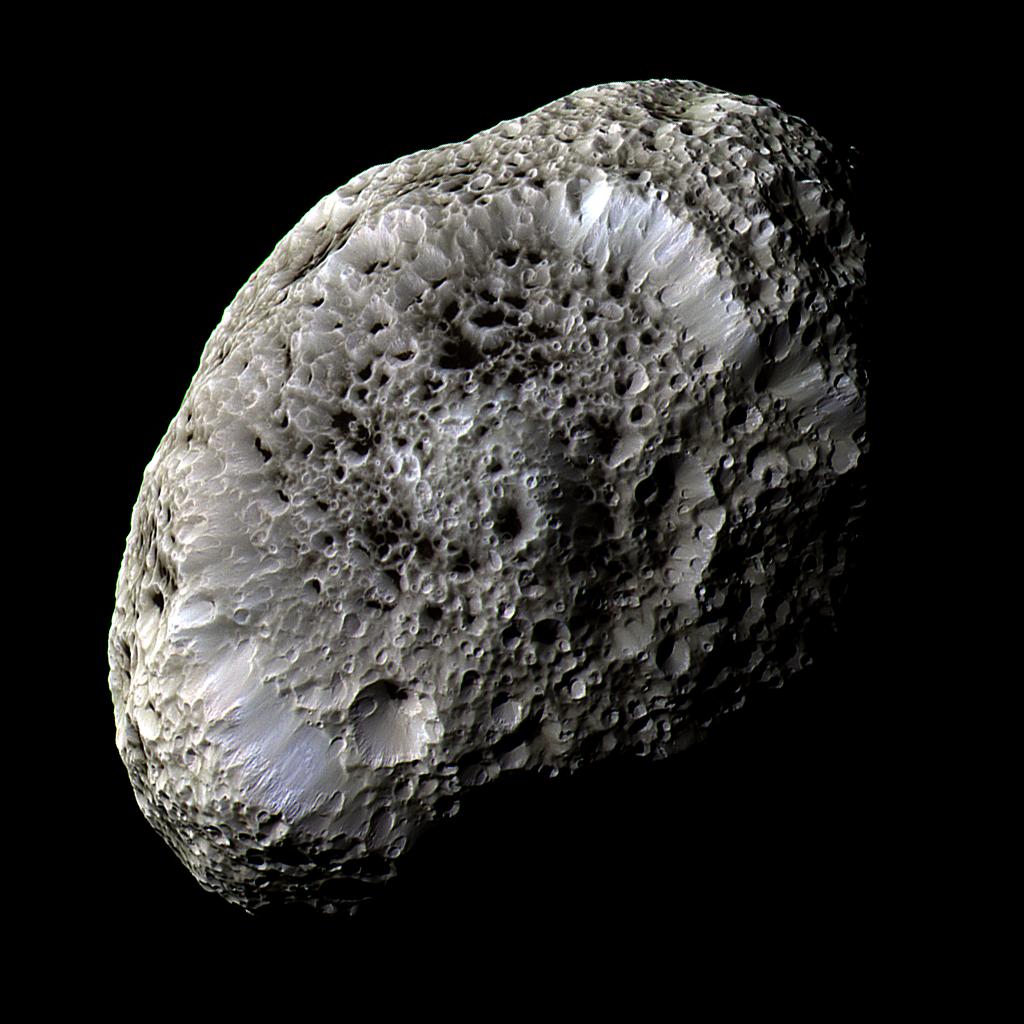
The tiny moon’s most prominent feature is Stickney Crater, pictured above in false color. The impact that created Stickney is thought to have almost shattered the roughly 17-mile-wide (27-kilometer-wide) moon.

Supernova
Faint wisps of gas dance across space, the remnants of a violent supernova that would have been visible to the naked eye on Earth for weeks at the dawn of human civilization some 10,000 years ago.

Spiral galaxy M83
Spiral galaxy M83 gleams with its high population of young stars and copious debris and dust.

Sun
An arm of super-heated gas, approaching nearly 1 million degrees, erupts from the surface of the Sun.

MyCn18
MyCn18, a young planetary nebula located about 8,000 light years away. This photograph was taken with NASA’s Hubble Space Telescope.

Screenshot

Unusual Auroras Over Saturn’s North Pole
The strange aurora are shown in blue in the above image, while the underlying clouds are shown in red. The previously recorded, also-strange hexagon cloud patterns are visible in red below the aurora. These Saturnian aurora can cover the entire pole, while auroras around Earth and Jupiter are typically confined by magnetic fields to rings surrounding the magnetic poles.

Space

Helix nebula
Infrared image by NASA’s Spitzer Space Telescope shows the Helix nebula.

Screenshot

Spiral galaxy M106
Beautiful view of spiral galaxy M106.

Screenshot

Main Galaxy String
A beautiful galaxy string showing thousands of galaxies.

Thousands of galaxies

M81 galaxy
M81 is also known as Bode’s Galaxy.

Monocerotis
The star Monocerotis is seen here on the fringe of the Milky Way, brightly illuminated by reflected light from a past explosion.

Antennae galaxies

Screenshot

Beautiful Photographs From Outer Space

Sunset over the Pacific

To Fly Free In Space

Space

Mars

Space Photography - Mars

The Moon

Screenshot

Saturn’s Ice Moon

Space

Venus

Space Photography - File:Venus globe.jpg

Jupiter

Space Photography - File:PIA04866 modest.jpg

Enceladus up close
The tortured surface of Saturn’s moon Enceladus and its fascinating ongoing geologic activity tell the story of the ancient and present struggles of one tiny world. The enhanced color view of Enceladus seen here is largely of the southern hemisphere. The south polar terrain is marked by a striking set of “blue” fractures and encircled by a conspicuous and continuous chain of folds and ridges. This mosaic was created from 21 false-color frames taken during the Cassini spacecraft’s close approaches to Enceladus on March 9 and July 14, 2005. Images taken using filters sensitive to ultraviolet, visible and infrared light were combined to create the individual frames. (NASA/JPL-Caltech) #

Space Photography - Enceladus up close

Earth seen from space

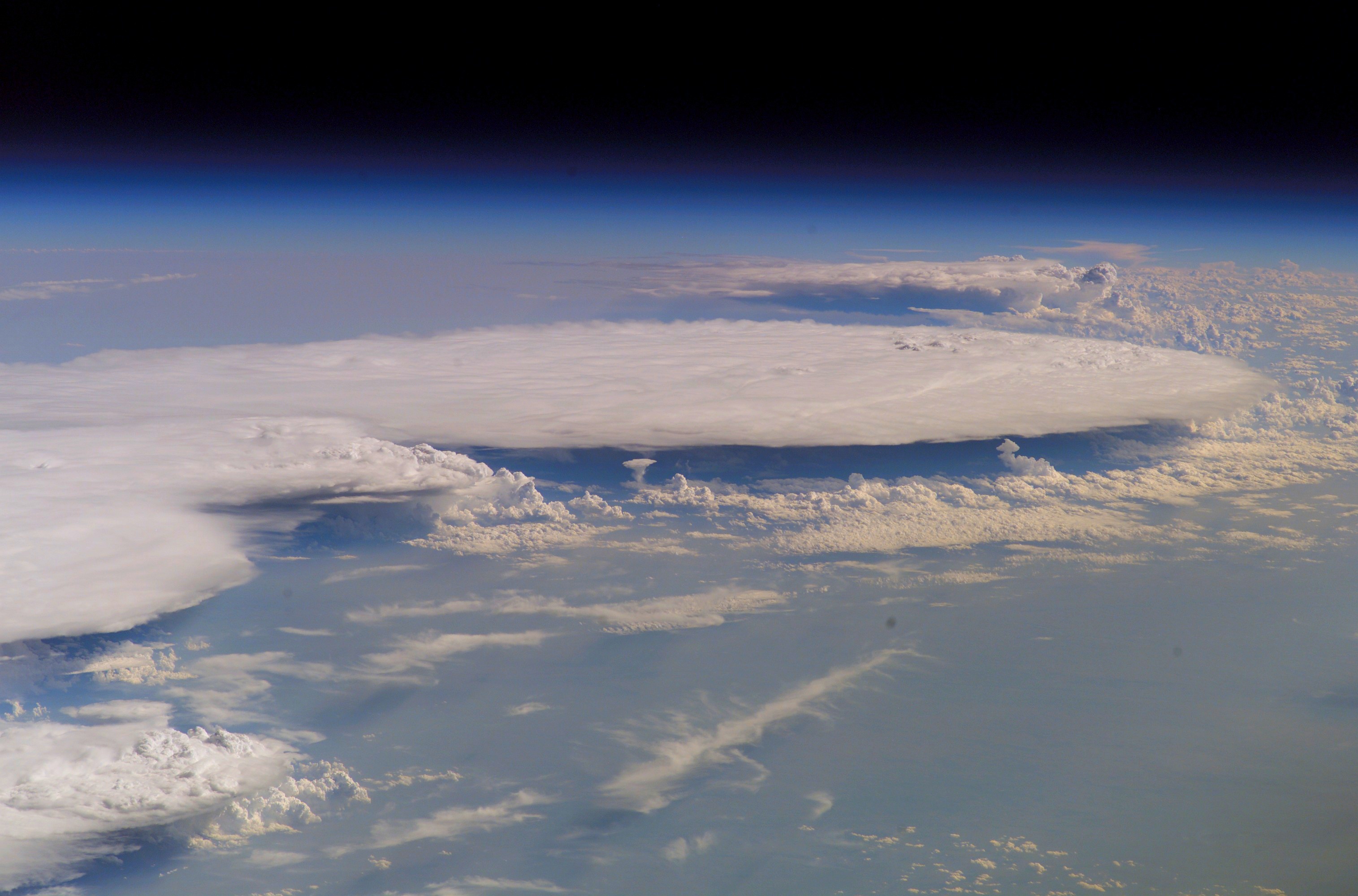
A Beautiful View of Huge Clouds Over Earth

Space

Space

Space

The Sunset On Mars

Space

Space Shuttle Endeavour
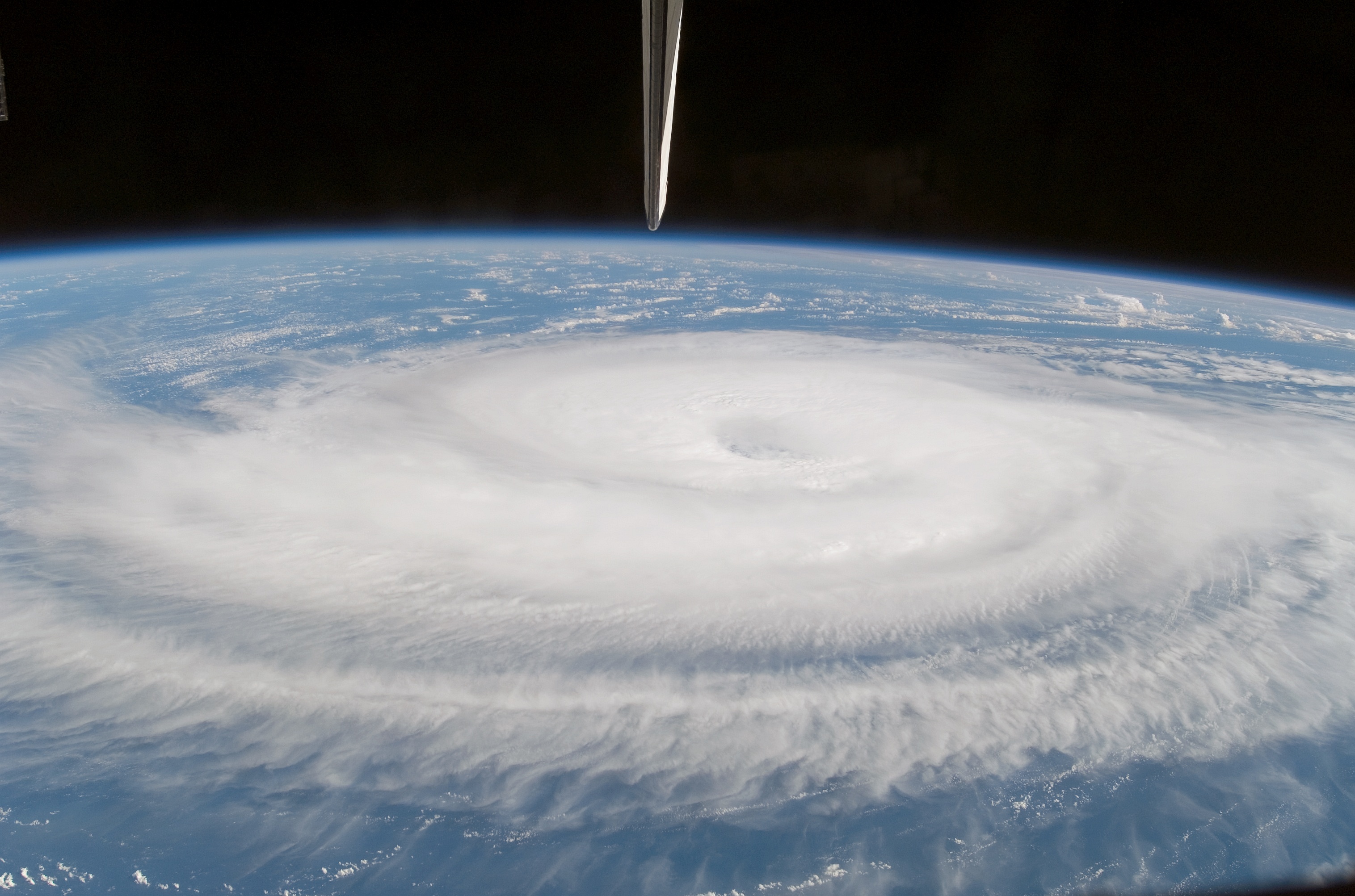
A boom used to inspect the shuittle’s heat shield is seen in this photo taken by a member of the shuttle crew.

Space Photography - Photographs from on board the International Space Station and Space Shuttle Endeavour - Telegraph

Recent scenes from the ISS
Closer still to Sarychev Peak Volcano, pyroclastic flows can be seen tumbling down its slope (lighter clouds, bottom). Also visible is a closer view of the condensation cloud or “pileus”, formed by the rapidly rising plume. (NASA/JSC) # [Google map]

Space Photography - Recent scenes from the ISS

Recent scenes from the ISS
Circular Contrails are visible, east of Lake Nipigon, Canada. (NASA/JSC) # [Google map]

Space Photography - Recent scenes from the ISS

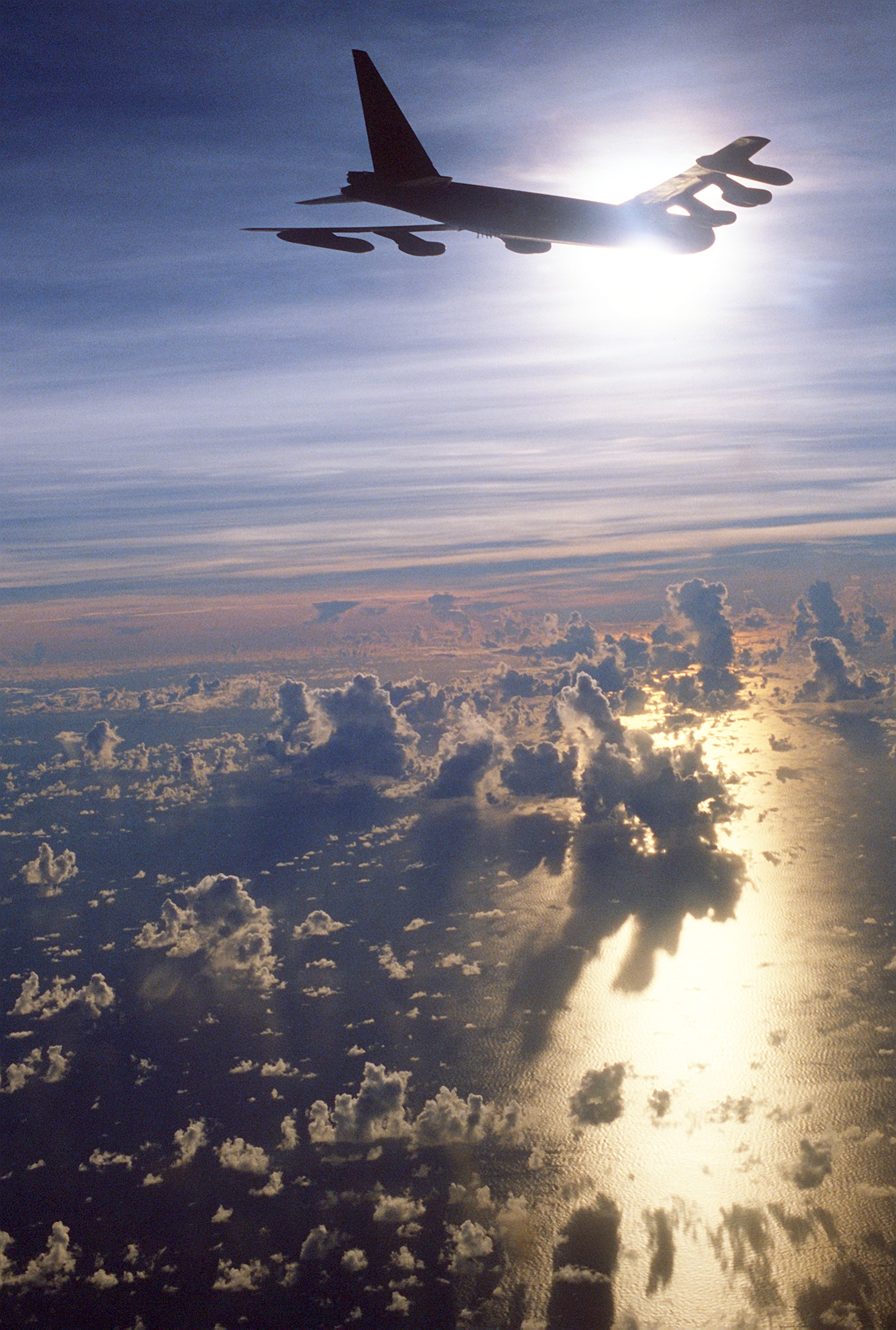
B-52
A U.S. Air Force B-52 Stratofotress Heavy Bomber Flies Over a Cloud-Covered Ocean, May 31, 1986

Space

Memorable Moments In Human Spaceflight

First space walk
Astronaut Ed White performs the first space walk, straightening the floating loops of slack in his tether as he moves away from the space shuttle Discovery.

An astronaut in space
An astronaut grasps a large power tool during maintenance of the Hubble Space Telescope.

American flag on the Moon<br /.Apollo 11 astronaut Buzz Aldrin stands with the American flag on the moon.

Screenshot

Footprint on the surface of the Moon
Buzz Aldrin’s famous footprint on the surface of the moon, taken in July of 1969 during the Apollo 11 mission, has come to be a fitting symbol of humanity's advance into space.

Shuttle STS-113 looms in the background

Space shuttle Endeavor
Leaving fiery plumes in its wake, the space shuttle Endeavor sears a path into the darkness on its way to the International Space Station.

STS-114 Discovery takes off
Plumes of smoke and dust boil from the perimeter of the launch pad during the take-off of STS-114 Discovery.

More Sources Of Inspiration

Related posts

Please take a look at the following related posts:

(al)


© vailrodrigues for Smashing Magazine, 2009. |
Permalink |
6 comments |
Add to del.icio.us | Digg this | Stumble on StumbleUpon! | Tweet it! | Submit to Reddit | Forum Smashing Magazine

Post tags: , ,

Most Popular today

About this blog

Site Sponsors