Search


Grab your Samsung Galaxy from Tata DoCoMo now!

quarta-feira, 30 de setembro de 2009 · 0 comentários

Grab your Samsung Galaxy from Tata DoCoMo now!

tata-docomo-samsung-galaxy

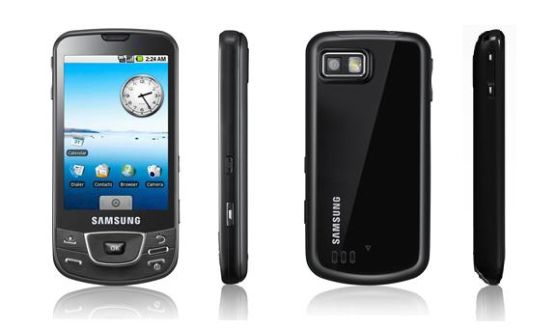
If you live in India (or know someone living in India), we have an offer for you. Samsung’s first Android phone, the Samsung Galaxy i7500, is available in India via the Tata DoCoMo cellphone service provider. This Android phone is available throughout all those cities in India where Tata has launched its GSM service. The phone is also going to be available with an offer of 500MB free downloads per month for six months.

Samsung i7500 Galaxy Features:

  • Quad-band GSM, HSDPA 7.2Mbps, HSUPA 5.76Mbps
  • Android OS with latest firmware 1.5
  • 3.2″ full capacitive touchscreen, 320×480 HVGA resolution
  • Micro SD expandable upto 16GB, 8GB included
  • 5MP camera with LED flash and geotagging
  • WiFi
  • GPS
  • Bluetooth A2DP
  • micro USB
  • 3.5mm audio jack
  • Accelerometer
  • FM radio

Along with a quality specs list, the phone draws its users in with its sleek bar form factor with no keypad.  Tata DoCoMo also looks forward to introduce other Samsung handsets under its flagship in the future. This one in particular faces some competition from the HTC Hero, which is available in India around the same price point.

Deepak Gulati, president, Tata DoCoMo said: "This launch marks the beginning of Tata DoCoMo's relationship with Samsung. We will continue working together to launch more innovative mobile offerings for Indian consumers on the Tata DoCoMo platform."

The phone comes pre-loaded with Google Mobile Services which include Google search, GMail, Google Talk, Google Chrome, Google Maps and YouTube. The phone is currently priced at INR 28,990.

via [UB-NEWS]

Similar Posts:


The Insanely Awesome Hunt for Dark Matter...

· 0 comentários

The Insanely Awesome Hunt for Dark Matter...

176484main_hst_dark_ring_1_full

"Even if we don't know what dark matter is, we know how it must act," said Eduardo Abancens, a physicist at Spain's University of Zaragoza and designer of a prototype dark matter detector 

Dark matter is the modern fairy dust that makes everything (cosmologically) better.  Upon observing that the universe would need to have several hundred times more mass than we can see to be consistent with modern theories, many scientists apparently thought “Fair enough, there must be several universes worth of invisible magic stuff hiding throughout the entirety of existence”.  Rather than the crazy heresy of “Maybe our theories need a little work”.
Lots of very smart people have come up with a huge variety of explanations for this absentee material, from ultrarelativistic non-baryonic matter (yes those are real words, even though it sounds like they just smashed together some sciencey sounding stuff), to effects from other universes.  The latter is supported by brane theory, but when you’re combining both dark matter and superstring theory you might as well throw in “A wizard did it” to explain all the flaws.

Normally people who constantly look for fictional things are labeled as crazy, and this scientific search may have reached psychosis point with spiral galaxy NGC 4736.  A team from the Polish Academy of Science have observed a spiral galaxy that doesn’t need the dark stuff.  This galaxy can be entirely explained in terms of the matter we see and the theories we have, and in a shocking reversal of the whole “Scientific Method” process other researchers are criticizing the find - because the observations don’t support the invisible thing they believe in. That’s not science, that’s religion.

Another suspect for this maybe-missing-matter is the neutralino, and we’ll have to ask you to believe us that we’re not just making up words at this point.  As a heavy, stable, weakly interacting particle it has all the right properties to hang back and just “be there” in the invisible way dark matter is expected to be, with only the usual slight flaw of being an utterly hypothetical string symmetric construction - but maybe not for long.  NASA’s gamma gazing GLAST satellite is surveying a radiation map of the sky for comparison with neutralino predictions, meaning it will be testing for dark matter, string theory and supersymmetry.  No word yet on whether it’s fitted with a unicorn detector too.

According to theoretical physicists, only around five percent of what makes up the universe can presently be detected. The existence of dark matter is inferred from the behavior of faraway galaxies, which move in ways that can only be explained by a gravitational pull caused by more mass than can be seen. They estimate dark matter represents around 20 percent of the universe, with the other 75 percent made up of dark energy, a repulsive force that is causing the universe to expand at an ever-quickening pace.

At the heart of the new detector -poetically called a scintillating bolometer- is a crystal so pure it can conduct the energy ostensibly generated when a particle of dark matter strikes the nucleus of one of its atoms.

To prevent interference by cosmic rays, the bolometer is shielded in lead, kept under half a mile of rock and frozen to near-absolute zero, the temperature at which all motion stops. At the edge of absolute zero, it's possible to measure "a high heat signal” -expected changes of a few millionths of a degree Fahrenheit. Abancens said the device could be operational in five years.

Do you get the feeling that we’re entering a 21st Century Alice in Wonderland rabbit hole!

Luke McKinney

http://www.wired.com/wiredscience/2009/09/dark-matter-detector/


Samsung Galaxy vs HTC Hero: The difference is skin-deep!

· 0 comentários

Samsung Galaxy vs HTC Hero: The difference is skin-deep!

hero-galaxy-duo

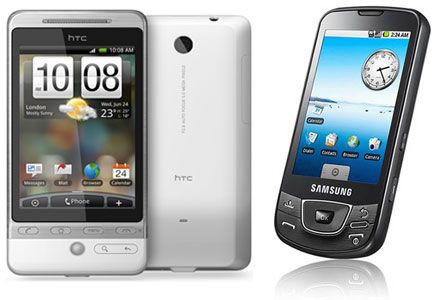
We recently had a chance to mess with two new Android devices, the Samsung Galaxy i7500 and the HTC Hero. Although on the surface, these two seem rather alike (3.2 inch capacitive touchscreens, Android 1.5, 5 MP shooter, GPS with compass), no two devices could be more different. And no, we are not yammering about the fact that the Galaxy has more onboard memory (8GB to the Hero’s relatively modest 500-odd MB) or that it has an OLED screen or that its camera has a flash, but about the interface.

Whereas Sammy has opted to let the Galaxy have the typical Android device look (complete with analog clock), HTC has decided to be far more innovative and thrown a skin over it. Called Sense, the UI is the successor of the much-hyped Touch Flo, and is certainly a heckuva differentiator. Unlike some manufacturers who just use skins to accommodate larger and more finger-friendly icons (these are the stylus’ last days, after all), HTC have made Sense something that adds to the Android experience. Instead of three customisable screens, the user gets a massive seven. Most significantly, the browser and the album have been tweaked to accommodate multi-touch – so you can zoom in and out of pages by pinching your fingers just like you can on that-phone-from-that-company-in-Cupertino. Top it all of with Flash support for the browser and the Galaxy starts looking positively poor, in spite of all its tech muscle.

In terms of operations, both phones run very smoothly, but let’s face it, the Hero does give users so much more, thanks to that interface. The Galaxy in contrast looks and performs like the HTC Magic on steroids – good, but not necessarily compelling. Yes, running widgets all the time on both devices butchers the battery but that is the peril of having always-on widgets, as users of the N97 discovered a few months ago.

It is a sign of the mobile times that we live in that it’s that interface that gives the Hero a massive boost over the Galaxy, which would have otherwise had it for lunch in the tech specs department. Perhaps therein lies the secret of success in the cellphone world these days – forget the specs, focus on the interface. HTC have certainly done their homework on that one. Samsung, who have done so much with TouchWiz, need to get something similar (preferably more powerful) on to the Galaxy and their forthcoming Android phones if they want to be really competitive.

Our verdict: If it is ease of use you are looking at, go for the Hero. Spec fetishists, head to the Galaxy.Similar Posts:


The Urge for ET Communication

terça-feira, 29 de setembro de 2009 · 0 comentários

The Urge for ET Communication

Radio_telescopes_et_communication_2

The search for extra-terrestrial life assumes two things: that there is some, and that it wants to talk, and while the first is obvious to anyone with even the remotest understanding of the size of the universe the second still poses a lot of question. The fact is there’s only one E.T. whose communications motives we ever understand, and all he wanted was to get off our crazy dirtball.  And we made him up.

Those interested in interstellar inquiry (which we really hope is all of you) should check out the METI discussion linked at the end of this post.  The Benford brothers launch an interesting discussion on the costs and constraints of any communicating aliens, and while the idea of applying economic limitations to alien life is depressing it’s well worth thinking about.  There’s also a discussion of the motivations for messages, and the sort of signal we should expect from each.

Thinking broadly, high-power transmitters might be built for wide variety of goals other than communication driven by curiosity. Here are a few examples:

Kilroy Was Here. These can be signatures verging on graffiti. Names chiseled into walls have survived from ancient times. More recently, we sent compact disks on interplanetary probes, often bearing people's names and short messages that can endure for millennia.

High Church. These are designed for durability, to convey the culture's highest achievements. The essential message is this was the best we did; remember it.

The Funeral Pyre: A civilization near the end of its life announces its existence.

Ozymandias: Here the motivation is sheer pride; the Beacon announces the existence of a high civilization,even though it may be extinct, and the Beacon tended by robots. 

Help! Quite possibly societies that plan over time scales ~1000 years will foresee physical problems and wish to discover if others have surmounted them. An example is a civilization whose star is warming (as ours is), which may wish to move their planet outward with gravitational tugs. Many others are possible.

Leakage Radiation: These are unintentional, much like objects left accidentally in ancient sites and uncovered long after. They do carry messages, even if inadvertent: technological fingerprints. These can be not merely radio and television broadcasts radiating isotropically, which are weak, but deep space radar and beaming of energy over solar system distances. This includes "industrial" spaceship launchers, beam-driven sails, "planetary defense" radars scanning for killer asteroids, and cosmic power beaming driving interstellar starships with beams of lasers, millimeter or microwaves. 

Believe and Join Us: Religion may be a galactic commonplace; after all, it is here. Seeking converts is common, too, and electromagnetic preaching fits a frequent meme.

Interstellar communication is no easy feat (assuming you haven’t found any kind of space-time shortcut). People like to joke about how an aliens first look at us will be I Love Lucy or American Idol (in which case we’ll be very lucky to avoid extermination), but physically it’d be easier for the alien to warp here and buy the DVDs.  Television transmitters aren’t exactly interstellar beacons.  The most powerful transmission tower in the world only emits 2.5 Megawatts - assuming zero losses (and while you’re at it wish for a unicorn), by the time the signal reaches the closest star it’s spread out over 130 billion square kilometers, only twenty picowatts per square meter.  Not even a trillionth of a lightbulb and, in case you haven’t noticed, the only thing we can see that far away is stars.

We have to assume than any information we intercept is either intentionally beamed at us (or out at random) or based on technology we haven’t imagined yet.  We should really hope for the latter or it’s going to be a long cold existence of extremely slow shouting at each things.

Luke McKinney

Regarding METI and SETI 


Evolution's Mutation Screening Process Discovered: One-Way Upgrades Only!

segunda-feira, 28 de setembro de 2009 · 0 comentários

Evolution's Mutation Screening Process Discovered: One-Way Upgrades Only!

1325186_400_300

Scientists have shown that evolution has built-in one-way gates, mutational processes which ensure that the benefits of millions of years aren’t undone by accident.

Evolution takes an unimaginably long time - so long that opponents refuse to believe it’s possible, or that even the amount of time is possible.  Progress is incredibly slow as random tiny mutations are screened over millions of years to discover which work best.  Backsliding would be even worse - the only thing worse than using a hundred million years to optimize a regulatory protein would be accidentally undoing the work over the next hundred kilo-millenia.  Now University of Oregon investigators have discovered a genetic ratchet which prevents such extremely anti-productive reversals.

Tracking a modern protein across time and species, they studied a modern human glucocorticoid receptor (GR) protein compared to an ancient example from almost half a billion years ago.  GR regulates our stress response, and is probably extremely confused about why its owners are now more upset about little pieces of paper than they used to be about saber-tooth tigers.

The researchers found seven important changes between the two, but when they attempted to reverse them the modern protein simply refused to work.  Further study found five more unimportant-looking changes which acted as one-way markers - they didn’t affect the function of the latest iteration, but attempts to move backwards won’t work with them present.  When all twelve alterations were undone, the protein functioned just as it had four hundred million years ago.

Of course, these evolutionary advantages only work on our DNA.  Seventeen million people watch Dancing With The Stars.  We’ve found other ways to undo humanity’s progress.

Luke McKinney

Evolutionary Ratchet http://esciencenews.com/articles/2009/09/23/ratchet.genetic.mutations.make.evolution.irreversible


"Asteroid Impacts are the Biggest Threat to Advanced Life in the Milky Way" -Stephen Hawking (The Weekend Feature)

sábado, 26 de setembro de 2009 · 0 comentários

"Asteroid Impacts are the Biggest Threat to Advanced Life in the Milky Way" -Stephen Hawking (The Weekend Feature)


D120ssc200501b2

Stephen Hawking believes that one of the major factors in the possible scarcity of intelligent life in our galaxy is the high probability of an asteroid or comet colliding with inhabited planets. We have observed, Hawking points out in Life in the Universe, the collision of a comet, Schumacher-Levi, with Jupiter (below), which produced a series of enormous fireballs, plumes many thousands of kilometers high, hot “bubbles” of gas in the atmosphere, and large dark “scars” on the atmosphere which had lifetimes on the order of weeks.


It is thought the collision of a rather smaller body with the Earth, about 70 million years ago, was responsible for the extinction of the dinosaurs. A few small early mammals survived, but anything as large as a human, would have almost certainly been wiped out.

Through Earth’s history such collisions occur, on the average every one million year. If this figure is correct, it would mean that intelligent life on Earth has developed only because of the lucky chance that there have been no major collisions in the last 70 million years. Other planets in the galaxy, Hawking believes, on which life has developed, may not have had a long enough collision free period to evolve intelligent beings.

Sl9calar"The threat of the Earth being hit by an asteroid is increasingly being accepted as the single greatest natural disaster hazard faced by humanity," according to Nick Bailey of the University of Southampton’s School of Engineering Sciences team, who has developed a threat identifying program.[ Image: Comet Shoemaker-Levy 9 collision with Jupiter]

The team used raw data from multiple impact simulations to rank each country based on the number of times and how severely they would be affected by each impact. The software, called NEOimpactor (from NASA’s “NEO” or Near Earth Object program), has been specifically developed for measuring the impact of ’small’ asteroids under one kilometer in diameter.

Early results indicate that in terms of population lost, China, Indonesia, India, Japan and the United States face the greatest overall threat; while the United States, China, Sweden, Canada and Japan face the most severe economic effects due to the infrastructure destroyed.

The top ten countries most at risk are China, Indonesia, India, Japan, the United States, the Philippines, Italy, the United Kingdom, Brazil and Nigeria.

Astrofisico_Stephen_Hawking"The consequences for human populations and infrastructure as a result of an impact are enormous," says Bailey. "Nearly one hundred years ago a remote region near the Tunguska River witnessed the largest asteroid impact event in living memory when a relatively small object (approximately 50 meters in diameter) exploded in mid-air. While it only flattened unpopulated forest, had it exploded over London it could have devastated everything within the M25. Our results highlight those countries that face the greatest risk from this most global of natural hazards and thus indicate which nations need to be involved in mitigating the threat."

What would happen to the human species and life on Earth in general if an asteroid the size of the one that created the famous K/T Event of 65 million years ago at the end of the Mesozoic Era that resulted in the extinction of the dinosaurs impacted our planet.

As Stephen Hawking says, the general consensus is that any comet or asteroid greater than 20 kilometers in diameter that strikes the Earth will result in the complete annihilation of complex life - animals and higher plants. (The asteroid Vesta, for example, one of the destinations of the Dawn Mission, is the size of Arizona).

How many times in our galaxy alone has life finally evolved to the equivalent of our planets and animals on some far distant planet, only to be utterly destroyed by an impact? Galactic history suggests it might be a common occurrence.

The first this to understand about the KT event is that is was absolutely enormous: an asteroid (or comet) six to 10 miles in diameter streaked through the Earth’s atmosphere at 25,000 miles an hour and struck the Yucatan region of Mexico with the force of 100 megatons -the equivalent of one Hiroshima bomb for every person alive on Earth today. Not a pretty scenario!

Recent calculations show that our planet would go into another “Snowball Earth” event like the one that occurred 600 million years ago, when it is believed the oceans froze over (although some scientists dispute this hypothesis -see link below).

While microbial bacteria might readily survive such calamitous impacts, our new understanding from the record of the Earth’s mass extinctions clearly shows that plants and animals are very susceptible to extinction in the wake of an impact.

Impact rates depend on how many comets and asteroids exist in a particular planetary system. In general there is one major impact every million years -a mere blink of the eye in geological time. It also depends on how often those objects are perturbed from safe orbits that parallel the Earth’s orbit to new, Earth-crossing orbits that might, sooner or later, result in a catastrophic K/T or Permian-type mass extinction.

VredefortThe asteroid that hit Vredefort located in the Free State Province of South Africa is one of the largest to ever impact Earth, estimated at over 10 km (6 miles) wide, although it is believed by many that the original size of the impact structure could have been 250 km in diameter, or possibly larger(though the Wilkes Land crater in Antarctica, if confirmed to have been the result of an impact event, is even larger at 500 kilometers across). The town of Vredefort is situated in the crater (image). 

Dating back 2,023 million years, it is the oldest astrobleme found on earth so far, with a radius of 190km, it is also the most deeply eroded. Vredefort Dome Vredefort bears witness to the world's greatest known single energy release event, which caused devastating global change, including, according to many scientists, major evolutionary changes. 

What has kept the Earth “safe” at least the past 65 million years, other than blind luck is the massive gravitational field of Jupiter, our cosmic guardian, with its stable circular orbit far from the sun, which assures a low number of impacts resulting in mass extinctions by sweeping up and scatters away most of the dangerous Earth-orbit-crossing comets and asteroids

Posted by Casey Kazan with Rebecca Sato

Note: This post was adapted from a news release issued by University of Southampton.

Source: http://www.rationalvedanta.net/node/131

Related Galaxy Posts:

The Dawn Mission -NASA’s Journey to the Beginning of the Solar System

The End of the World -A Video (the most terrifying short film ever!)

Past as Prelude -Asteroids & the Origin of LIfe (Includes “Impact Map of the World”)

A Future KT Impact Event -Would the Human Species Survive

Dr Strangelove Two? -Cambridge Astrophysicts gives Earthlings a 50/50 Chance of Survival by End of Century


Did Clay Trigger 1st Life on Earth?

sexta-feira, 25 de setembro de 2009 · 0 comentários

Did Clay Trigger 1st Life on Earth?


Orange_color

In the early 1990s, Jack Szostak of Harvard Medical School began investigating the molecular origins of life in order to understand how chemicals combined to form the first living organisms on primitive Earth. Inspired by Tom Cech and Sidney Altman's discovery that RNA could catalyze chemical reactions inside cells (which later earned them a Nobel Prize), Szostak began to explore RNA's ability to catalyze its own reproduction.

Building
on earlier work by other scientists, Szostak and colleagues began
experimenting with a clay mixture common on early Earth called
montmorillonite, which was found to catalyze the chemical reactions
needed to make RNA.


So, did life originally spring from clay as some creation myths assert? 

Not necessarily, but it does provide a possible mechanism for explaining how life initially arose from nonliving molecules. Szostak’s team at the Howard Hughes Medical Institute and Massachusetts General Hospital showed that the presence of clay aids naturally occurring reactions that result in the formation of fatty sacks called vesicles, similar to what scientists expect the first living cells to have looked like. Further, the clay helps RNA form. The RNA can stick to the clay and move with it into the vesicles. This provides a method for RNA’s critical genetic information to move inside a primitive cell.

“It’s exciting because we know that a particular clay mineral helps with the assembly of RNA,” Szostak said. “There certainly would have been lots of environments on early Earth with clay minerals. It’s something that forms relatively easily as rocks weather.”

The researchers also found that the clay expedited the process by which fatty acids form vesicles that could serve as cell membranes. When RNA and fatty acids were mixed with the montmorillonite, the clay seemed to help transport the RNA inside the vesicles, forming a cell-like structure. Szostak and his team surmised that a similar process could possibly have led to the creation of the first cell.

Posted by Casey Kazan.

Related Galaxy posts:


Rocky-Mountain High Rings Discovered Circling Saturn

quinta-feira, 24 de setembro de 2009 · 0 comentários

Rocky-Mountain High Rings Discovered Circling Saturn

IMG000614-br500

Cassini has been orbiting Saturn for over five years - meaning its mission in longer than the original Enterprise’s and, with recent results, is far better looking.  Cassini captured images of the Saturnian equinox, a solar system event which happens only once every fifteen Earth years, and the results astonish even professional astronomers - if you look at the pictures, they’ll blow your mind.

The joint NASA/ESA/ASI (Italian Space Agency) operation saw the two tonne satellite enter orbit around the gas giant and launch the Huygens probe at Titan.  A sentence which sounds like a science fiction set in a Greek Myth.  For the last five years the satellite has been returning extraordinary images on the immense planet, with a higher “great picture to weight” ratio than every supermodel on the planet put together.  The extended mission is made possible by plutonium-powered radio-thermal generators.  (These were of course heavily protested at launch time, putting another tick in the “environmentalists against anything cool” column.)

Equinoxrings_cassini_big

The equinox enabled Cassini to capture sharp relief images of the incredible rings around Saturn with the Sun shining sideway-on (when you’re in space you’re really at the mercy of natural lighting).  The results were amazing: rings thought to be ten meters thick, with variations of two stories at most, turned out to have vertical jumps the size of the Rocky mountains.  The thing about space is you can hide things that big in it.  The results captured during the week of perfect plane illumination will be studied for years to come, and the great thing about the internet age is that they aren’t just for the professionals - they stitched together a truly mind-boggling high resolution image just for us online-types to goggle at.

If you don’t click the link then you’re a liar:  you’re saying you have better things to do with your time, and even if your job is head champagne tester at the Optimus Prime and Jetpack factory, that’s simply not true.

Luke McKinney

Cassini mission (make sure to click the full resolution image!)
The image


1783 Iceland Eruption Shrunk the Nile -The Planet's Longest River

quarta-feira, 23 de setembro de 2009 · 0 comentários

1783 Iceland Eruption Shrunk the Nile -The Planet's Longest River

161632main1_volc_chain_sm

Volcanic eruptions in high-latitudes can greatly alter climate and distant river flows, including the Nile, according to a study funded in part by NASA. Researchers found that Iceland’s Laki volcanic event, a series of about ten eruptions from June 1783 through February 1784, significantly changed atmospheric circulations across much of the Northern Hemisphere creating unusual temperature and precipitation patterns that peaked in the summer of 1783, including far below normal rainfall over much of the Nile River watershed and record low river levels.

The study provided new evidence that large volcanic eruptions north of the equator often have far different impacts on climate than those in the tropics.

 ”While considerable research has shown that eruptions in the tropics influence climate in the Northern Hemisphere winter, this study indicates that eruptions in high-latitudes produce changes in atmospheric circulation in the Northern Hemisphere summer,” said Luke Oman, Rutgers University, New Brunswick, N.J.

To see what effect major high-latitude volcanic eruptions have on rainfall and river levels, the researchers used records on the height of the Nile River that date back to 622 A.D. Record low Nile River water levels occurred in 1783-1784 following the Laki event. Similarly low levels were observed after the Mount Katmai, Alaska, eruption in 1912, when the Niger River was also at a record low. And in 939 A.D. there was also low Nile River flow following the Eldgjá eruption in Iceland. “Our analysis found there is less than a 3 percent chance that the Laki and Katmai low river flow events could be attributed to natural climate variability,” said Oman.

161624main_nile_river

Using a sophisticated computer model developed by NASA’s Goddard Institute for Space Studies, New York, the researchers linked the Laki eruptions to a cascade of effects that rippled across much of the Northern Hemisphere, altering surface temperatures that ultimately resulted in much below normal rainfall over the Sahel of Africa and record low water levels on the Nile River for up to a year. The Sahel is a stretch of land from the Atlantic Ocean to the “Horn of Africa” that includes the Sahara Desert and savanna areas with sparse vegetation. 

“These findings may help us improve our predictions of climate response following the next strong high-latitude eruption, specifically concerning changes in temperature and precipitation,” said Oman. “Many societies are very dependent on seasonal precipitation for their livelihood and these predictions may ultimately allow communities time to plan for consequences, including impacts on regional food and water supplies.”

The Laki event had a significant impact on the climate because it released large amounts of sulfur dioxide into the atmosphere. When combined with water vapor, the gas formed into tiny particles called aerosols that reduced incoming solar radiation, cooling the average temperature over Northern Hemisphere land masses by as much as 3 degrees Celsius (5.4 degrees Fahrenheit) in the summer of 1783, as simulated with the computer model. Tree ring data also showed significantly reduced tree growth in the summer of 1783, indicative of the coolest summer of the last 400 years in northwestern Alaska, while tree growth in parts of Siberia was the least in 500-600 years. 

Jason McManus 

Source: NASA/Goddard Space Flight Center


Cosmic Flashes from Invading Black Holes (Texting Flash Gordon!)

· 0 comentários

Cosmic Flashes from Invading Black Holes (Texting Flash Gordon!)

HaRGBm08tjr

Gamma Ray Bursts are the brightest things to happen to the universe since its beginning - extraordinarily intense electromagnetic events releasing more energy per second than the sun does in a billion years, and basically an excuse for astronomers to use every awesome adjective they know.  But some have been seen to last far longer than standard theories could explain, and a new mechanism has been put forward: EATING STARS.

GRBs are an incredible demonstration of just how big a universe is: they’re extremely rare, only a few per galaxy per million years, and we see about one a day.  Think about what that implies (but stop when your head starts to spin - we’re trying to educate you here, not stick you in a Total Perspective Vortex).  They’re so interesting NASA launched a satellite just for them, the Swift Gamma-Ray Burst Mission - a mission so advanced that “Swift” isn’t even an acronym.  They just liked the word.

GRBs are bursts of plasma ejected from the poles of dying stars but Swift observed that the central jet engine causing this emission lasted longer than the burst, and sometimes far longer than previous models could explain (almost three days).  Now scientists from the University of Leeds have put forward an explanation for how this intergalactically emitting dynamo could endure so long: it’s eating a star.

By consuming a nearby star the black hole would be sucking up an enormous amount of matter, and if it’s rapidly spinning (as many of these holes in spacetime are, a combination of concepts that really proves human language wasn’t built for relativity) it can twist it all along the intense magnetic field lines being dragged around the event.  The gigantic magnetic stresses involved are what give the burst its incredible energy, lasting as long as it takes for the entire star to be consumed.

Reminder:  this is not the plot from an episode of Voltron.  This is really happening, all over the place, and we have an actual robotic spacecraft up there watching them.  Science is awesome.

Luke McKinney

Invading Black Holes Explain Cosmic Flashes 


The Planet's Violent Epicenter -A Sweeping Arc of 160 Volcanoes

terça-feira, 22 de setembro de 2009 · 0 comentários

The Planet's Violent Epicenter -A Sweeping Arc of 160 Volcanoes

Volcano_3Karymsky, the most active volcano in the  eastern volcanic zone Kamchatka Peninsula is a 1,250-kilometer long peninsula in the Russian Far East. The Kamchatka River and the surrounding Central Valley are flanked by large volcanic belts, containing around 160 volcanoes, 29 of them still active. The peninsula has the highest density of volcanoes and associated volcanic phenomena in the world, with 19 active volcanoes being included on the UNESCO World Heritage List.

The highest volcano is Klyuchevskaya Sopka (4,750 m or 15,584 ft), the largest active volcano in the Northern Hemisphere], while the most striking is Kronotsky, whose perfect cone is a prime candidate for the world’s most beautiful volcano.  Deep seismic events and tsunamis are fairly common along the Kuril-Kamchatka Trench: a pair of megathrust earthquakes occurred off the coast on October 16, 1737, and on November 4, 1952, in the magnitude of ~9.3 and 8.2.

Karm2The Karymsky volcano is a symmetrical stratovolcano constructed within a 5-km-wide caldera that formed during the early Holocene. 

The latest eruptive period began about 500 years ago, following a 2300-year quiescence. Much of the cone is mantled by lava flows less than 200 years old.

Image Source: photo by J. M. Lees,Associate Professor, Geophysics University of North Carolina, Chapel Hill.

Posted by Jason McManus.


Mystery of Today's Google "Flying Saucer" Logo Solved (VIDEO)

segunda-feira, 21 de setembro de 2009 · 0 comentários

Mystery of Today's Google "Flying Saucer" Logo Solved (VIDEO)

Hgwells09

Okay, the mystery is solved! Google’s current UFO logo links to a Google search of H.G. Wells, author "War of the Worlds," which made tri-pod walking, death-beam emitting robots the stuff of which our childhood nightmares were made. The most recent enactment of the scifi story starred Tom Cruise but its most famous was the 1938 radio play -see below- which made another Welles — Orson of Citizen Kane fame— a household name with a performance that many across the USA took to be an actual alien invasion. 

Also, the logo links to the author's search page. First hit is his Wells' Wikipedia entry (note the birth date): “21 September 1866 – 13 August 1946),[1] was an English author, best known for his work in the science fiction genre.” 

Don’t miss the re-enactment below of the presentation and public reactions to the original Mercury Theater on the Air broadcast of H.G. Well’s War of the Worlds, performed as a Halloween special on October 30, 1938. The live broadcast was set in Grover’s Mill, an unincorporated village in West Windsor Township, New Jersey frightening many listeners into believing that an actual Martian invasion was in progress. 

The first two thirds of the radio program H. G. Well’s novel is about an alien invasion of Earth was broadcast as a series of simulated news bulletins, led millions of listeners to believe that an actual alien invasion was in progress. The fact that the program was commercial free added to the dramatic effect. In the days following the adaptation, there was widespread outrage in the press and public forums. 

The episode launched Orson Welles to fame. Welles used recordings of Herbert Morrison’s radio reports of the Hindenburg disaster to coach actor Frank Readick and the rest of the cast, to create the mood he wanted.

Roughly two thirds of the 55 1/2 minute play was a contemporary retelling of events of H.G. Well’s novel presented as news bulletins in documentary style. This approach was originally used by Fr. Ronald Knox for his satirical “newscast” of a riot overtaking London over the British Broadcasting Company in 1926 

Posted by Casey Kazan.

Source: http://www.wired.com/epicenter/2009/09/flash-google-flying-saucer-logos-explained/


Most Popular today

About this blog

Site Sponsors